
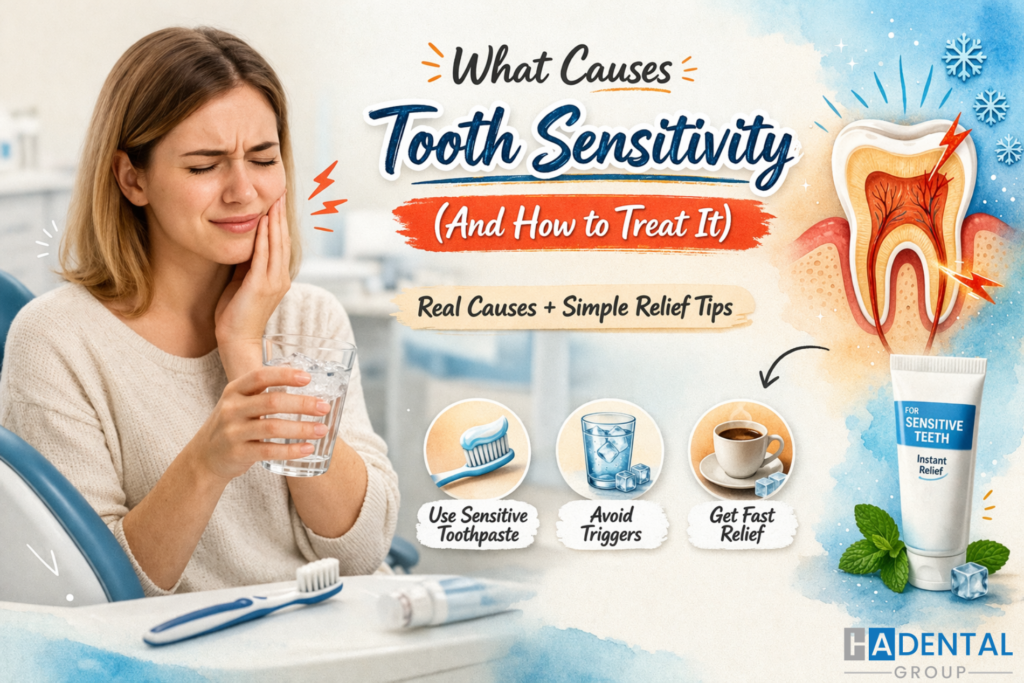
What Causes Tooth Sensitivity and How to Treat It
Have you ever taken a sip of cold water or a bite of ice cream and suddenly felt a sharp pain in your teeth?
That quick, uncomfortable feeling is something many people experience, and it’s usually a sign of tooth sensitivity. It can come and go, or sometimes stick around long enough to make everyday things—like eating or brushing—feel annoying.
The good thing is, in most cases, it’s manageable. Once you understand what’s causing it, finding the right tooth sensitivity treatment becomes much easier.
So, Why Do Teeth Become Sensitive?
Your teeth have a protective outer layer called enamel. Beneath that is a softer layer with tiny nerve endings.
When that protection gets thinner—or your gums pull back slightly—those nerves become exposed. That’s when hot tea, cold drinks, or even sweet foods start triggering that sudden pain.
Common Reasons You Might Be Experiencing Sensitivity
Brushing a Bit Too Hard
A lot of people think brushing harder means cleaner teeth. In reality, it can slowly wear down the enamel and irritate your gums. Over time, that can lead to sensitivity.
Gums Pulling Back
Sometimes gums recede naturally with age, or due to brushing habits or gum issues. When that happens, the root of the tooth becomes exposed—and that area is more sensitive.
A Small Cavity
Not all cavities cause obvious pain right away. Sometimes sensitivity is the first sign that something isn’t right.
Grinding Your Teeth
If you grind your teeth, especially at night, it puts pressure on your enamel. Over time, this can wear it down without you even realizing it.
Recent Dental Work
If you’ve recently had a cleaning, whitening, or filling, a little sensitivity is normal. It usually settles within a few days.
A Tiny Crack or Chip
Even a small crack can expose the inner part of your tooth and cause discomfort when eating or drinking.
What You Can Do to Reduce Sensitivity
Switch to a Sensitive Toothpaste
This is often the easiest place to start. With regular use, it can help reduce that sharp reaction over time.
Be Gentle When You Brush
Try using a soft toothbrush and lighter pressure. It’s not about brushing harder—it’s about brushing properly.
Pay Attention to Triggers
If certain foods or drinks make it worse, just be a bit mindful. You don’t have to cut everything out—just avoid extremes when possible.
Keep Up with Daily Care
Brushing, flossing, and rinsing regularly may sound basic, but it really does help prevent small issues from turning into bigger ones.
Don’t Ignore Ongoing Pain
If the sensitivity isn’t going away, it’s worth getting checked. Sometimes it’s something simple, and catching it early makes things easier.
When Should You See a Dentist?
If you’re noticing sensitivity more often, or if the pain feels stronger than usual, it’s a good idea to have it looked at.
Sometimes what feels like “just sensitivity” could be an early sign of a cavity or gum problem. A quick visit can clear things up and guide you toward the right treatment.
Final Thoughts
Tooth sensitivity is one of those things people often ignore at first—but it’s your teeth’s way of telling you something needs attention.
The good news is, small changes can make a big difference. Brushing a little more gently, using the right products, and staying consistent with your care routine can go a long way.
And if it’s still bothering you, don’t wait too long. Getting the right tooth sensitivity treatment early can save you from bigger problems later—and make everyday things comfortable again.
Leave a reply