
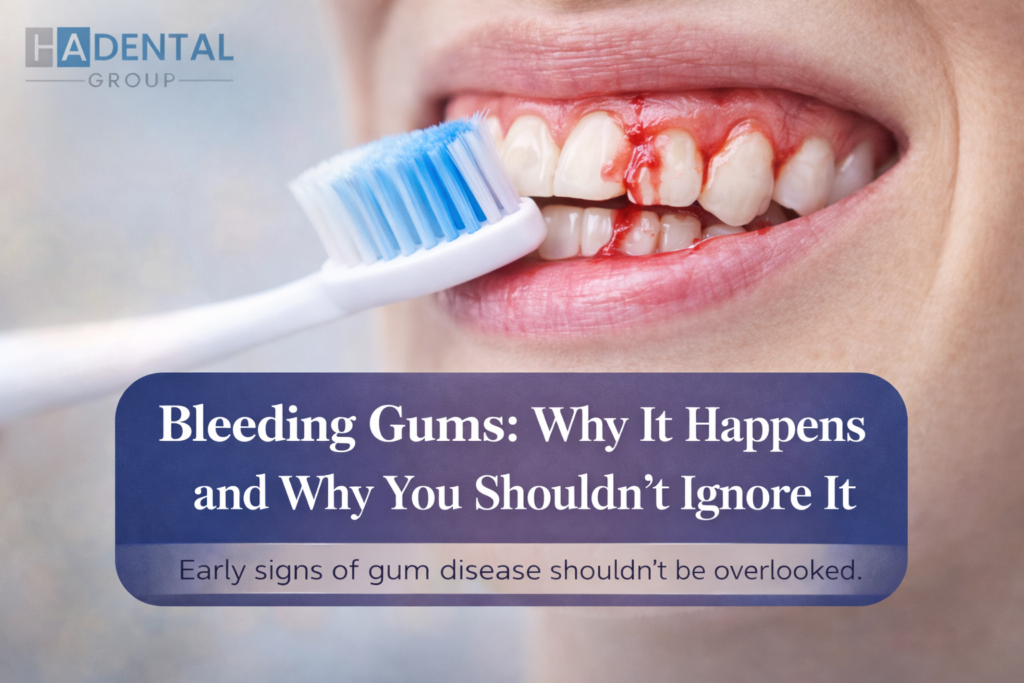
Why Your Gums Bleed When You Brush — And Why You Shouldn’t Ignore It
If you’ve ever noticed a little blood in the sink while brushing your teeth, you’re not alone. Most people see it once or twice, shrug it off, and move on. After all, it doesn’t hurt much… so it must not be serious, right? The truth is, bleeding gums are often your mouth’s way of asking for attention. And while it may seem minor, it can be one of the early signs of gum disease — something that’s much easier to treat when caught early.
At H. A. Dental Group, we see this all the time. Many patients tell us, “I thought it was normal.” Let’s talk about why it happens — and why ignoring it isn’t a great idea.
Is It Normal for Gums to Bleed When You Brush?
Short answer: no — but it’s common.
Healthy gums usually don’t bleed. If they do, it’s often a sign that plaque and bacteria have started irritating the gum tissue. This irritation causes inflammation, which makes gums more sensitive and more likely to bleed during brushing or flossing.
The good news? At this stage, the problem is often reversible.
Common Reasons for Bleeding Gums
There isn’t just one cause. Bleeding gums can happen for several reasons, including:
- Plaque buildup along the gumline
- Inconsistent brushing or flossing
- Brushing too hard
- Using a hard-bristled toothbrush
- Hormonal changes (especially during pregnancy)
- Smoking or vaping
However, the most common reason we see is early gum disease.
Bleeding Gums: An Early Warning Sign of Gum Disease
One of the biggest gum disease early signs is bleeding during brushing or flossing. This early stage is called gingivitis.
At this point:
- Gums may look red or puffy
- You might notice bleeding when brushing
- Breath may not feel as fresh as usual
Because there’s usually little or no pain, people often ignore it. Unfortunately, if left untreated, gingivitis can progress into periodontitis, which can lead to gum recession, bone loss, and even tooth loss.
Why Ignoring Bleeding Gums Can Cause Bigger Problems
It’s easy to think, “I’ll deal with it later.” But gum disease doesn’t fix itself.
Over time, untreated gum inflammation can:
- Damage the bone that supports your teeth
- Cause gums to pull away from teeth
- Increase tooth sensitivity
- Affect overall health (gum disease has been linked to heart disease and diabetes)
Catching the issue early makes treatment simpler, more comfortable, and more affordable.
Should You Stop Brushing If Your Gums Bleed?
This is a common mistake — and an understandable one.
If your gums bleed, don’t stop brushing or flossing. In fact, gentle and consistent cleaning is exactly what helps gums heal. The key is using the right technique and tools.
Dentists usually recommend:
- A soft-bristled toothbrush
- Gentle circular motions
- Daily flossing (even if there’s light bleeding at first)
With proper care, bleeding often improves within days to weeks.
When Should You See a Dentist?
You should book a dental visit if:
- Bleeding gums continue for more than a week
- Gums feel sore, swollen, or tender
- You notice gum recession
- You have persistent bad breath
A professional cleaning can remove plaque and tartar that brushing alone can’t reach — allowing gums to heal properly.
How Dentists Treat Bleeding Gums
Treatment depends on the cause, but often includes:
- Professional dental cleaning
- Personalized oral hygiene guidance
- Gum disease evaluation
- Follow-up care if needed
The earlier it’s addressed, the simpler the solution.
Final Thoughts
Bleeding gums may seem small, but they’re rarely something to ignore. They’re often one of the first signs that your gums need care — not later, but now.
The good news is that early gum problems are very treatable. With the right care and a little attention, your gums can return to a healthy, comfortable state.
If your gums bleed when you brush, consider it a message from your body — and an opportunity to protect your smile long-term.
A healthy smile starts with healthy gums.
Leave a reply