
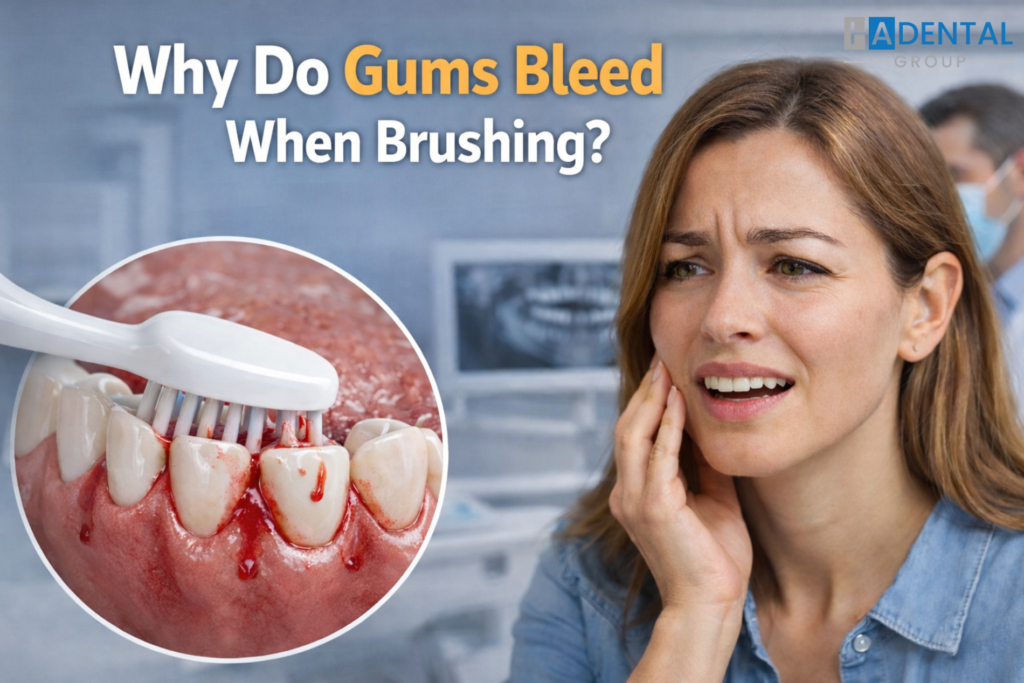
Why Do Gums Bleed When Brushing?
Noticing a little blood in the sink when you brush your teeth can be unsettling. Many people ignore it at first, thinking it’s normal or just happens sometimes.
But the truth is—bleeding gums are usually a sign that something isn’t right.
In most cases, it’s not serious if caught early. Understanding the bleeding gums causes can help you take the right steps before it turns into a bigger problem.
Is It Normal for Gums to Bleed?
A lot of people assume it’s normal, especially if it doesn’t hurt. But healthy gums don’t bleed during brushing or flossing.
If you’re seeing blood regularly, your gums are trying to tell you they need attention.
Common Bleeding Gums Causes
There isn’t just one reason behind bleeding gums. It can happen due to a combination of daily habits and oral health issues.
Brushing Too Hard
Using too much pressure while brushing can irritate your gums. Over time, this can make them sensitive and more likely to bleed.
Not Flossing Regularly
If you don’t floss often, plaque builds up between your teeth. When you finally start flossing again, your gums may bleed—but that’s usually a sign they need more consistent care.
Plaque Buildup
Plaque is a sticky layer of bacteria that forms on your teeth. If not removed properly, it can irritate your gums and lead to bleeding.
Gingivitis (Early Gum Disease)
This is one of the most common bleeding gums causes.
Gingivitis happens when plaque builds up along the gum line. It can cause redness, swelling, and bleeding—especially during brushing.
The good news is, it’s reversible if treated early.
Vitamin Deficiency
Lack of certain vitamins, especially vitamin C and vitamin K, can affect gum health and make bleeding more likely.
Hormonal Changes
Hormonal changes during pregnancy or certain health conditions can make gums more sensitive and prone to bleeding.
What Can You Do About It?
The good news is that in many cases, bleeding gums can improve with simple changes.
Use a Soft Toothbrush
Switch to a soft-bristled toothbrush and brush gently. This helps protect your gums while still cleaning effectively.
Improve Your Oral Care Routine
Brush twice a day and floss daily. Consistency is key when it comes to gum health.
Don’t Skip Dental Cleanings
Professional cleanings remove plaque and tartar that you can’t remove at home. This helps reduce irritation and bleeding.
Pay Attention to Your Diet
Eating a balanced diet with essential vitamins supports healthy gums.
Stay Consistent
If your gums bleed when you start flossing, don’t stop. With regular care, the bleeding usually reduces as your gums become healthier.
When Should You See a Dentist?
If your gums continue to bleed even after improving your routine, it’s best to get them checked.
Persistent bleeding could be a sign of gum disease or another issue that needs professional treatment.
Final Thoughts
Bleeding gums are easy to ignore—but they shouldn’t be.
In many cases, it’s your body’s way of telling you to take better care of your oral health. By understanding the bleeding gums causes and making small changes, you can prevent more serious problems in the future.
If you’re unsure or your symptoms continue, visiting H.A. Dental Group can help you get the right guidance and treatment before things get worse.
Leave a reply