
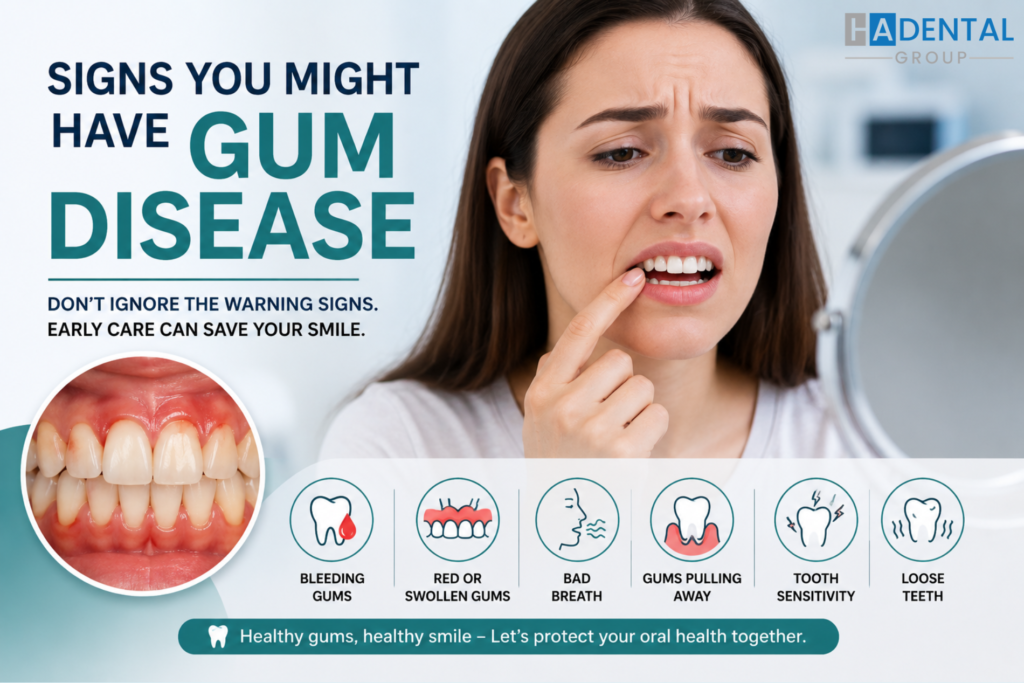
Signs You Might Have Gum Disease
Most people don’t think much about their gums unless something starts bothering them. Maybe you notice a little blood while brushing. Maybe your gums feel sore, or your breath doesn’t feel fresh no matter what you do. A lot of people ignore these things at first because they don’t seem serious. But sometimes, they’re your mouth’s way of warning you that something needs attention. The thing about gum disease is that it often starts slowly and quietly. That’s why recognizing early gum disease symptoms can really help.
Bleeding While Brushing Isn’t Something to Ignore
A little blood in the sink might not seem like a big deal—but healthy gums usually don’t bleed when you brush or floss.
This is often one of the first signs that your gums are irritated or inflamed.
A lot of people stop flossing when this happens, thinking they’re making it worse. In reality, it usually means the gums need better and more consistent care.
Your Gums Look Red or Puffy
Healthy gums are usually firm and light pink.
If they start looking swollen, darker in color, or feel tender, it could be an early sign that plaque and bacteria are irritating the area.
Sometimes the change is small enough that people don’t notice it right away.
Bad Breath That Doesn’t Go Away
Everyone gets bad breath sometimes.
But if it keeps coming back even after brushing, mouthwash, or chewing gum, it may be connected to bacteria around the gums.
Persistent bad breath is something many people with early gum problems experience without realizing why.
Teeth Looking “Longer” Than Before
This one surprises people.
If your teeth suddenly seem a little longer, it may not actually be the teeth changing—it could be your gums pulling back slightly.
When gums recede, they expose more of the tooth and sometimes even the root, which can also lead to sensitivity.
Sensitivity That Wasn’t There Before
If cold drinks or sweet foods suddenly make your teeth uncomfortable, your gums could be part of the reason.
As gums recede, the more sensitive areas of the tooth become exposed.
Teeth Feeling Slightly Loose
This usually happens in more advanced stages, but it’s important not to ignore.
Gums help support your teeth. If gum disease progresses, that support weakens, and teeth may start feeling loose or different while chewing.
So, What Causes Gum Disease?
In most cases, it starts with plaque buildup.
When plaque sits around the gums for too long, bacteria begin irritating the area. Over time, that irritation can turn into inflammation and eventually gum disease.
Things like smoking, stress, poor brushing habits, and skipping dental visits can also increase the risk.
The Good News? Early Gum Disease Can Often Be Managed
This is why paying attention early matters.
When caught in the beginning stages, gum problems are usually much easier to treat. Sometimes improving your daily routine and getting a professional cleaning is enough to get things back on track.
Small Habits Make a Big Difference
You don’t need a perfect routine—you just need consistency.
Simple things help a lot:
- Brushing gently twice a day
- Flossing regularly
- Drinking enough water
- Keeping up with dental visits
Over time, those habits really add up.
When Should You Get It Checked?
If your gums keep bleeding, feel swollen, or something just doesn’t feel normal, it’s worth getting checked.
A quick visit now is usually much easier than waiting until the problem becomes painful or more serious later.
Final Thoughts
Gum disease doesn’t usually appear overnight. Most of the time, your mouth gives small warning signs first.
The key is not ignoring them.
Paying attention to early gum disease symptoms can help protect your gums, your teeth, and your overall oral health in the long run.
And if you’re unsure about what you’re noticing, the team at H. A. Dental Studio is always there to help you figure things out before they become bigger problems.
Leave a reply